The movie “Blackboard Jungle” takes place in a tough high school, North Manuel High School, where the students make the rules and the teachers accept their defeat. The main troubled characters are Gregory Miller (Sidney Poitier), and Artie West (Vic Morrow). Miller is more intelligent and less bitter than his surrounding students. He originally wanted to get the most he could out of his education but soon realized the teachers, his friends, and his family didn’t really care. West is one of the worst kids in the class because he has control over the other students who look up to him and fear him. He is also the leader of a gang that is constantly putting innocent people in danger.

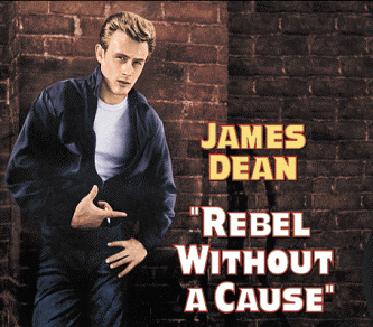
http://www.virginmedia.com/images/Rebel-Without-a-Cause-431.jpg
Every kid in both movie rebels for different reasons. In the beginning of the movie, “Rebel Without a Cause,” Jim, John, and Judy are shown at the city jail in town for misbehaving. Judy is there for walking around at one in the morning after her dad called her a dirty tramp. Jim was taken there after being caught by the police as a minor under the influence of alcohol. John is there on his birthday for shooting puppies and killing them. All three of their families and Ray Fremick (Edward Platt), want to help them but don’t know how to get through to the teens. While in the other movie, “Blackboard Jungle,” West and Miller are in school misbehaving during class and outside of the classroom. Miller was never shown in the movie actually doing anything wrong but that doesn’t mean he didn’t behave his best or have respect for their teacher, Richard Dadier (Glenn Ford). West on the other hand tried sexually harassing another teacher in the library, attacked Mr. Dadier and another teacher in a dark alley, and tried fighting Mr. Dadier with a knife during class. Mr. Dadier is the only person who wants to help these kids and find a way to get through to them.
 ation. Both of these kids get what they have been belonging which gives them a reason to conform a better way of life. On the other hand, Plato and West are not so lucky. Plato thought he, Judy, and Jim could be a family but when he realizes it was just for fun he gets really angry and makes more bad decisions. The police shoot Plato when they don’t know what Plato is doing next and he dies because of this. West tries to fight Mr. Dadier with a knife and wants his buddies to back him up. His buddies realize this isn’t right and help the teacher which gets West taken to the principal’s office to be expelled.
 The movies show how some teenage rebellion can be tamed or easily fixed, while other kids are unredeemable. Most of the rebels just slip into these negative behaviors because they don’t know the other alternatives but come out when they realize what is right (the moorings). The unredeemable teens don’t just change their ways because they were caught and got in trouble or because they see their friends making better decisions. None of the kids have the same reason for why they express their teenage angst, but all find a common ground to rebel. Both movies show the main characters constantly struggling to do what’s right or go with what’s wrong. A quote from Senator Estes Kefauver clearly sums up why kids act this way (Doherty 83). He said “Somehow we must get at the causes, must clean up the conditions, which breed criminals. We will find them, I think, in the slums, where the kids don’t have a place to play; in social conditions, where the young feel that society is their enemy; in economic conditions which breed hunger and despair; and, perhaps; even in a lack of understanding on the part of some of our correctional institutions”. Even though society isn’t going to change for just one kid, a parent or a friend who cares might which could save a young adolescent from more dangers.

http://www.destgulch.com/movies/bjungle/bjung12.jpg
Works Cited
Doherty, Thomas. Teenagers and Teenpics: The Juvenilization of American Movies in the 1950s. Philadelphia: Temple University Press, 2002.
Rickard, Ed. "Youth Culture, the Crisis of Early Adolescence." Bible Studies at the Moorings. 7 Feb. 2009 http://www.themoorings.org/life/family/crises/ycult.html.


I really like a lot of the points you make about youth culture in the movies. You did a good job of summarizing the events of the movies. I also liked the multiple comparisons between the two movies. I thought that the way you wrote about specific instances of youth culture in the movies was a good idea. You chose a good quote to use from the article.
ReplyDeleteI like how you make clear distinctions between the characters, like Plato and West. It helped support your title and main point. I thought you did a good job of simply summarizing the movie plots. I really like the quote you use in the conclusion - it's a very strong finish to the essay. I also thought the organization and pictures were good.
ReplyDelete