Wednesday, May 13, 2009

Are they Rebelling or is it A Way of Life?


Ask anyone and they will say that teenagers want to rebel against their parents, teachers, peers or society as a whole. They try to reject authority, resist tradition, and break all the rules. However in the movie Trainspotting, directed by Danny Boyle, the characters do not do drugs to rebel, they do drugs for the pleasure. The main character Mark Renton played by Ewan McGregor and a few of his friends do heroin because they are addicted to it. Renton, Sick boy played by Jonny Lee Miller, and Spud played by Ewen Bremmer, spend most of their time searching for the next high. To them, without the drug they have no real existence, so doing heroin has become their current lifestyle. Throughout the movie Renton realizes he isn’t happy with his life and even the worst parts of others’ lives are better than the best parts in his. By the end of the movie Renton moves on to make a better life for himself while his friends are stuck at a dead end road. In the early 1950s and throughout the 1960s teenagers might have rebelled against society or parents but by the 1980s the reasons behind the actions were different. It wasn’t so much as rebellion; it was a lifestyle that became a trend. Trainspotting could be considered as teens rebelling without a cause because Renton chooses to do heroin until he finds something better. According to the definition of rebel they are rejecting and resisting the law by doing heroin but it’s not because they want to rebel against parents, government officials or other peers. To them it’s just a way of life throughout their journey.


A part of young adults’ development is establishing their own identity form their parents or family. In the movie Rebel Without a Cause directed by Nicholas Ray, Jim Stark played by James Dean rebels because of his parents poor parenting which was a common theme in the movie. Judy played by Natalie Wood and Plato played by Sal Mineo also rebelled as teenagers because of the failure of parental guidance. Another common example of rebellion is J.D. Salinger’s’ novel Catcher in the Rye. The main character Holden Caulfield rebels against society because everything is becoming a part of the mass culture. He thinks buying into mass culture will take away his own identity so he tries to reject it all together. On the other hand the novel A Clockwork Orange written by Anthony Burgess shows rebellion in a different way. The main character Alex and his gang rebel by hurting innocent people, steal items from their victims, and have many sexual interactions. It is never clear for the reason of this rebellion but it is breaking rules, and rejecting authority. Rebel Without a Cause, Catcher in the Rye, and A Clockwork Orange are all examples from the 50s or the 60s.


The movie Trainspotting shows how teens do things that are breaking the rules or rejecting authority but are not doing it to rebel. To Sick Boy, Renton and Spud doing heroin was act of entertainment not an act of rebellion. Renton and Sick Boy even try to quit doing the drug so they can live a better lifestyle. Unfortunately they fail the first attempt and continue to use heroin because they are addicted to it. Even when Spud and Renton are caught stealing this wasn’t an act of rebellion either. This was just the way of life for the group of teens. Renton stays sober and moves to London and begins to enjoy life there until his old friends show up. He is convicnced by Sick Boy to give all of his saved money to a professional heroin dealer to receive two kilos of heroin and sell it to other people to make a profit. Again this wasn’t them trying to break the law, go against their parents, or to reject authority; to them it was a chance to make easy cash fast. The next day Renton takes the money and leaves wanting to change his life, live drug free, and be happy.


Life is a journey. When you’re a teenager your journey is being made by your own decisions and not your parent’s decisions. Rebelling against their parents, society, and tradition just give them more decisions of their own. In the 50s and 60s it was a new thing and becoming very common for a young adult to rebel but now the actions those teens were making are not considered rebellion. It’s just a part of the journey they take while being a teen. Renton made it clear in the beginning of the movie that he had many decisions he could make but chose heroin for no specific reason. He said “Choose Life. Choose a job. Choose a career. Choose a family. Choose a fucking big television, choose washing machines, cars, compact disc players and electrical tin openers. Choose good health, low cholesterol, and dental insurance. Choose fixed interest mortgage repayments. Choose a starter home. Choose your friends. Choose leisurewear and matching luggage. Choose a three-piece suit on hire purchase in a range of fucking fabrics. Choose DIY and wondering who the fuck you are on Sunday morning. Choose sitting on that couch watching mind-numbing, spirit-crushing game shows, stuffing fucking junk food into your mouth. Choose rotting away at the end of it all, pissing your last in a miserable home, nothing more than an embarrassment to the selfish, fucked up brats you spawned to replace yourselves. Choose your future. Choose life... But why would I want to do a thing like that? I chose not to choose life. I chose somethin' else. And the reasons? There are no reasons. Who needs reasons when you've got heroin?” (Trainspotting). But once he started to grow up and realize that the choices he had been making were not good choices he changed his mind. He said “Now I've justified this to myself in all sorts of ways. It wasn't a big deal, just a minor betrayal. Or we'd outgrown each other, you know, that sort of thing. But let's face it, I ripped them off - my so called mates. But Begbie, I couldn't give a shit about him. And Sick Boy, well he'd done the same to me, if he'd only thought of it first. And Spud, well okay, I felt sorry for Spud - he never hurt anybody. So why did I do it? I could offer a million answers - all false. The truth is that I'm a bad person. But, that's gonna change - I'm going to change. This is the last of that sort of thing. Now I'm cleaning up and I'm moving on, going straight and choosing life. I'm looking forward to it already. I'm gonna be just like you. The job, the family, the fucking big television. The washing machine, the car, the compact disc and electric tin opener, good health, low cholesterol, dental insurance, mortgage, starter home, leisure wear, luggage, three piece suite, DIY, game shows, junk food, children, walks in the park, nine to five, good at golf, washing the car, choice of sweaters, family Christmas, indexed pension, tax exemption, clearing gutters, getting by, looking ahead, the day you die” (Trainspotting). He wanted to continue on with his journey and move past his teenage years.


Works Cited


Trainspotting. Dir. Danny Boyle. Perf. Ewan McGregor. DVD. 1996.

Monday, April 13, 2009

The All American Sneaker for Teens


Youth Culture has many different modes of expression with fashion or style being one of them. One of the easiest ways for a teen to express them self is the style of shoes they wear. Almost every day of your life, anywhere you go, and with any outfit, shoes are worn. When people pick out shoes, some may go for comfort while others may go for color, brand or price. A popular shoe for teens is the brand Converse. The Converse Rubber Shoe Company was created in 1908 and nine years later came out the with Converse’s star shoe, the All Star (Retroland 1). The All Star brand of Converse is also known as "Chuck Taylors" or "Chucks" for short. The earliest All Stars gave you the option of only two colors, black or white, and now come in a wide variety of colors and styles for both females and males (Retroland 1). It started off as the shoe for basketball players, and now is worn by anyone of any age but with the focus being towards teens. These shoes have appeared in many movies, T.V. shows and are worn by many bands which helps give its appeal towards the viewers or fans. The Converse All Star is the All American Sneaker.


For many teens having their own identity is key, making fashion an easy way for them to express who they are. Different scenes in Youth Culture wear different styles of clothing but the All Star Converse shoes are worn by many individuals in different youth culture scenes. One of the appeals of the shoes is the different styles it comes in such as the Chuck Taylor All Star hi cut, low cut and slip on shoe (Converse 1). Another appeal of the shoe is the wide variety of colors ranging from green all the way to the traditional black or from prints with bubbles or the British flag (Chucks Connect 1). It is one of the most popular shoe choice with 60% of Americans have owned or own at least one pair of these shoes (Chucks Connect 1). This classic fashion item is worn by many regular people of different occupations and interests along with celebrities. “For many people, chucks represent freedom: freedom from the world of work (although these days many people are fortunate enough to be able to wear them at work), freedom of expression, with many colors to choose from to express individuality, freedom from heavy boots and shoes that weigh your feet down, and the freedom associated with summers and vacations” (Chucks Connect 3). The All Star “Chuck Taylors” has been around for almost a century and still very fashionable.


The rubber sole with canvas that comes up to the ankle was designed and made popular here in the United States. Marquis M. Converse created the Converse Rubber Shoe Company in Massachusetts (Retroland 1). The shoe company decided to design the All Star for the growing sports market and became a legend when basketball player Chuck Taylor would never be caught playing basketball for the Akron Firestones without his All Star shoes one again (Retroland 1). This Shoe was the first mass produced basketball shoe in Northern America (Chucks Connect 1). Chuck Taylor believed in the shoe so much he decided to work for Converse in 1921 selling the shoes and later became a player/coach for the Converse All Stars which was the company’s industrial league basketball team (Chucks Connect 1). The white high top was designed for the Olympics in 1936 and later became the “Official” shoe the United States Armed Forces (Chucks Connects 1). It wasn’t until 1957 that the All Star low cut was introduced and became just as popular (Chucks Connects 1). The Converse shoes started being worn by many famous musicians and by the younger generations. In the 80s and 90s the ownership changed many times until 2001 when the company had to file for bankruptcy (Chucks Connect 2). Unfortunately the manufacturing is now being made in Asia and the Company has been bought out by its rival Nike (Chucks Connect 3). Over 750 million shoes have been sold in its 80 years of existence with probably more years and sales to come (Chucks Connect 1). Since mid 50s the Converse shoe has transformed, gone through rough times, and keeps reinventing itself.


This Converse phenomenon has been marketed towards the youth culture through many types of media such as the T.V., movies, and Magazines ads. The shoe has also been worn by many musicians on an everyday basis and for performances. Some of the T.V. shows that we grew up watching and watch now have actors wear the All Star shoes including Are You Afraid of The Dark?, The OC, Full House, Mythbusters, Heroes, and Seinfeld (Chucks Connect 7). They have been featured as ads in magazines such as Vogue and GQ (Chucks Connect 1). These converse shoes have also been appearing in films for decades. Some of the most popular films you can find them in are Grease, Footloose, West Side Story, Sandlot, American Pie, Happy Gilmore, The Pursuit of Happyness, and i Robot (Chucks Connect 8). The All Star has been worn by bands for decades also including but not limiting to Green Day, Phil Collins, Metallica, Poison, Jason Mraz, and The Early November (Chucks Connect 2). Even Otto Graham of the Cleveland Browns football team wears Converse (Chucks Connect 1). Many of you have probably watched these T.V. shows, Movies, or listen to these bands and never knew that they were related to Converses in a way. There are also many more bands, movies, T.V. shows and movies the Converses appear in. By these shoes being worn by someone’s favorite band or actor, it may make a fan decide “it’s cool” to wear those shoes and buy a pair them self. Converse has been very lucky over the years to have famous people who enjoy wearing the shoes because it acts as a way of marketing.


The Converse All Star is the teen shoe of choice because of comfort, fashion, popularity, and media. Teens can wear them when they are wearing jeans or playing sports and can match many outfits if they are just black or have a design on the canvas. One of the best features of the Converse “Chuck Taylor” All Star is its simplicity. There is no doubt when I say this shoe has been around for decades and will probably around for a couple more. It is obvious that there is a reason why the All Star has been so popular and been around for so long. Converse doesn’t need many marketing tools with all the appearances it has in the media. With the many different styles and wide selection of color there is a shoe that could probably be perfect for any teen wanting to express themselves.

“Chuck Taylor is smiling every time someone laces up a pair of his "Chuck Taylor" sneakers.” Chuck Connect


Works Cited:

" Converse (Chuck Taylor All-Star)." Retroland. 13 Apr. 2009 http://www.retroland.com/pages/retropedia/fashion/item/3229

The ChucksConnection. 2009. Hal Peterson Media Services. 13 Apr. 2009 http://chucksconnection.com

Converse - Chuck Taylor, Jack Purcell, Basketball Shoes, Design Your Own Converse Shoes. 13 Apr. 2009 http://www.converse.com

Images:

http://chucksconnection.com/celebritiesblackfilm/index.html

http://chucksconnection.com/musicians.html

http://chucksconnection.com/tv.html

http://www.kicksonfire.com/wp-content/uploads/2008/01/scott_patt.jpg

Videos:

http://www.youtube.com/watch?v=AkW09BZcSoM&feature=player_embedded

http://www.youtube.com/watch?v=SxdFfcanmUM&feature=player_embedded

http://www.youtube.com/watch?v=UGFDPZ4c8Gs

Friday, April 10, 2009

An Elusive, Unique Psychedelic Trip


Did you ever have a dream where after you woke up you wish you could fall back asleep and continue the dream? Or the next night you thought about your dream before you went to bed so maybe you could dream it again? Taking acid is a lot like dreaming, sometimes it’s good, sometimes it’s bad. Closing your eyes at night is just like slipping acid in your mouth- you don’t know if it will be fun and full of adventure or bad and in a stage of panic. Like dreams, each LSD trip differs from any previous trip and you never know how it will unfold. Dreams are a series of images, sounds, and feelings occurring in the mind during sleep and personal experiences are often incorporated in dreams (Wikipedia 1). The outcome of an LSD trip is usually determined by the person’s state of mind while taking the drug and the setting is the environment around the user at the time (Erowid 1). The Pranksters in The Electric Kool Aid Acid Test written by Tom Wolfe take acid many times throughout the duration of the novel. Wolfe describes some of the images, feelings and sounds the Pranksters have while they are tripping. The novel also tells the stories of the people who had bad trips and of the many different locations where the Pranksters took acid. The Electric Kool-aid Acid Test is proof that psychedelic trips on acid are as unique and varied as the minds of the people who experience them.

Ken Kesey, a young, talented novelist, and group of followers known as the Merry Pranksters participate in wild experiments with LSD at Kesey’s house in La Honda, California. He sets up hi-fi speakers on the roof of the house, hangs nutty mobiles from branches, nailed wild paintings to tree trunks, and set up all sorts of recording apparatuses inside the house (Wolfe 58). This creates a wild psychedelic experience when on LSD and is focused on experiments with light and noise. Sandy’s LSD trip turns particles captured by light into neon dust that you see in the atmosphere and now feel flowing up from the heart into the brain like an electric fountain (Wolfe 59). Some of the Perry Lane people would lie on the floor rapping back and forth while passing the tape-recorder microphone in the air so the voices cut in and out ending with interesting results (Wolfe 58). According to Marc Anderson, “probably the best way to use LSD would be in one’s home with several trusting supportive friends ”(Erowid 1). Kesey’s house back behind the woods with neighbors a mile away is a perfect getaway to have wild experiments in private.

The group of Pranksters got the idea to venture out and take a bus east to New York that they painted to say Furthur. On a test run in the bus, the Pranksters were zonked after taking acid orange juice, when a cop pulls them over and starts going through a traffic-safety inspection (Wolfe 69). Neal Cassady, one of the Pranksters, talks to the cop who only gives them a warning while the rest roll around in grass giggling (Wolfe 70). An experience that could have easily been bad causing a bad trip luckily turned out to be okay in the end. On the second day of the journey Paula Sundsten takes acid orange juice for the first time, runs towards a lake in the Arizona desert thinking the slimy kelp sparkles like a diamond (Wolfe 75). Babbs yells “Gretchin Fetchin the Slime Queen which later turns into Gretch making it Paula’s new nickname. Not all the acid trips while on the bus run smoothly. Hagen’s girl drinks the acid orange juice, sits in the back of the bus with nothing on, and becomes Stark Naked in their movie (Wolfe 83). The bus pulls up to Larry McMurty’s house, McMurty and his son come outside, and Stark Naked yells “Frankie” over and over (Wolfe 86). She runs off the bus, picks up this boy and hugs him thinking it’s her little boy, and gets picked up by the cops where she is taken to a psychiatric ward (Wolfe 87). Unfortunately for Stark Naked she could not stay “on the bus” both physically and spiritually while the others continued their journey.


After heading back to La Honda, the Pranksters continued to take LSD, however their cultural movement was beginning to rise and was drawing in many different crowds of people. They put up a huge sign at Kesey’s place to welcome the Hell’s Angels that was fifteen feet long, three feet high, and in red white and blue (Wolfe 169). The Angels drug of choice was beer so LSD was an unknown substance that made them very peaceful (Wolfe 172). The party went on for two days with everyone having a wonderful time and ended with a marvelous alliance between the two groups. Next was the Pranksters fantasy to go to the Beatles show and invite them back to La Honda with a sign out front welcoming the Beatles (Wolfe 198). The Pranksters take acid gas and hop on the bus to go to the show (Wolfe 201). There was barbed wire fences making it feel like a concentration camp, a crowd of girls are caught in a state of sheer poison mad cancer according to Kesey, and the group all get bad vibrations (Wolfe 207). Even though none of them had a bad trip, the setting was uncomfortable so the Merry Pranksters leave dispirited and not fulfilling their fantasy (Wolfe 209). Later when they start having huge parties of Acid Tests, a girl name Clair Brush freaks out on her first after taking acid spiked Kool-Aid for the first time (Wolfe 274). The Acid tests became a huge success and luckily for Clair she was okay after her trip ended.

Each time you go to bed or slip LSD into your mouth you hope that it’s better than the last dream/trip you had. Dreams unlike LSD, end when you wake up and no matter if it was good or bad and you continue to live your life. An acid trip ends when the effects start to ware off and when the trip ends badly, it can change your life forever. Bad reactions to LSD are almost always dependent on the user (Erowid 4). The psychological effects, or also known as the trip, also depend on previous experiences, state of mind, environment, dose strength, and they also vary from trip to trip (Wikepedia 5). Although there were a few unlucky ones, the Merry Pranksters enjoyed chasing after an elusive good trip on LSD in the Electric Kool-Aid Acid Test.

Works Cited:

Anderson, Marc. "Psychoactive Vaults." Erowid. 10 Apr. 2009 .

"Dream -." Wikipedia, the free encyclopedia. 10 Apr. 2009 .

"Lysergic acid diethylamide -." Wikipedia, the free encyclopedia. 10 Apr. 2009 .

Wolfe, Tom. The Electric Kool-Aid Acid Test. New York: Picador, 1968.

Images:

http://www.bruceeisner.com/photos/uncategorized/keseyfurthersmall_1.gif

http://lpaparelli.googlepages.com/electric_kool-aid_acid_test.jpg/electric_kool-aid_acid_test-full.jpg

Wednesday, March 25, 2009

Yowl


I saw the best minds of my generation destroyed by foolishness, thirsty for crazy commotion, swinging from one adventure to the next foolproof distraction just for giggles,

who spent countless nights drinking from a sufficient alcohol bottle and communicating with superficial wannabe’s to still feel empty deep inside,
who camouflage their unique young face in cheap make-up to have self confidence and still feel rejected by society,

who smoked themselves ignorantly sluggish thinking this is bliss, forgetting the consequences of the after effects,

who could care less about human intelligence, wasting precious time shunning any system of education and leaving with nothing in their hands,
who became mindless drones to degrading lovers, losing valuable keepsakes, and regretting the never returning novelties,

who experimented with deadening poison to feel a sensational high, just to crash and burn with tremendous deterioration from the one night of horseplay,
who ran from the law, causing many misfortunes upon common people and getting caught in the end only to never grasp the lesson,

who spend every nickel and dime on anything expendable to lose their dreams for the future and get stuck in an inescapable nightmare for the next decade,
who were expelled from high school for obscene pranks & crummy behavior towards teachers and peers,
who cruised along many streets with aimless directions just to avoid the folks at home and searching for justifications or resolutions to life’s little misfortunes that could easily be found in their own soul,

who sold themselves to the mass culture since everyone that surrounded them were and buying into the crowds definition of cool,

who never earned a pretty penny by doing a honorable man’s job and instead sucked their folks dry for everything manageable,

who let themselves be trampled on by simpleminded people that enjoy torturing passive people just for merriment,

who spend every waking moment either longing about the past or worrying about the future just to realize they wasted the past year doing nothing,

who never get caught up in life’s little troubles with love, angst, school, or family and later regret having the wrong obligations in life.


Eschew! Eschew! Regret! Shame! Wrong doers whose lives were crushed by countless mistakes!

Eschew! Nightmares of Eschew! Eschew the heartless! Grief Eschew! Eschew the hungry children!

Eschew the draft! Eschew the unforgiving prisons! Eschew the court fees paid by average citizens! Eschew the string of bad luck given to decent people!

Eschew whose mind that is a scrambled puzzle! Moloch whose blood is dirtier than sewage water! Eschew whose fingers take without paying! Eschew whose mouth is full of deceiving words! Eschew whose heart is blacker than coal!

Eschew Pollution! Enemies! hostages of love! brain washing schools! broken master pieces! Eschew the endless nights and countless fights!

Eschew Dreams! Supernatural! Fantasies! Inebriating substances! Men who act like whores! Free criminals!


Young Adolescents! I’m with you in Kent where you’re more foolish than I am

I’m with you in Kent where you feel smaller than an ant

I’m with you in Kent where peer pressure is in every corner

I’m with you in Kent where student pull all nighters just to get a studio project done on time

I’m with you in Kent where most of the faculty don’t know how to teach

I’m with you in Kent where you’re confined to a small white room with a complete stranger day in and day out

I’m with you in Kent where sometimes there is no winning the epic battle of love

I’m with you in Kent where you have the chance to turn your life around for the better

I’m with you in Kent where disease or disorder is commonly found among others

I’m with you in Kent where you can’t only use geometry and geometrical systems of thinking

I’m with you in Kent where it’s a race with many hurdles striving to come in first place

I’m with you in Kent where once it’s over you are happy but the journey was painful

Pure! Pure! Pure! Pure! Pure! Pure! Pure! Pure! Pure! Pure! Pure! Pure!

The earth is pure! The heart is pure! The foot is pure! The eyes are pure!

Everyone is pure! Every place is pure! Everything is pure! Every moment is pure!

The beggar is as pure as the pope! The madman is pure as our minds are holy! The president is as pure as a new born child!

The novels are pure the voice is pure the drummers beat is pure the dancers leaps are pure!

Pure Megan pure Jenn pure Brad pure Josh pure Katie pure Scara Pure Hatfield’s pure parents pure sister’s pure brother pure pets pure the suffering homeless pure the forgotten human angels!

Pure forgiveness! Pure faith! Pure luck! Pure the soaring airplanes! Pure the busy streets full of cars! Pure the forests full of wild animals!

Pure Northfield Pure Bedford Pure Macedonia Pure Kent Pure Bavaria Pure Paris Pure Vienna!


Allen Ginsberg’s poem Howl inspired me to write my own parody of the poem. In the poem you meet junkies, visionaries, and criminals in the Beat Generation that Ginsberg came across. He writes it in a free verse form exemplifying the idea of writing freely and spontaneously. The poem is brilliantly written with nothing that can compare to it and is encouraging to anyone who reads it. I chose to write my poem about the people I have come across in my generation. Many of the people I know have made wrong decisions and have become a criminals or junkies. Howl inspired me because maybe if I could write what I have seen and how I feel I could get a message across to other young adolescents. I tried to say true to his technique of writing by creating images with descriptive words and writing freely. I also made sure to keep a similar beat to the beat in Ginsberg’s poem. One of the first steps in writing a parody is to analyze the poet’s work.

The poem Howl is one of the principle works from the beat generation. Originally Howl was considered to be obscene because of Ginsberg’s unique writing style. He used many descriptive words to create many different images that were still tied together by a string through out his piece. Ginsberg’s poem shows the reader the horror in the world while telling a story and keeping a beat. Howl is made up of three parts and a footnote, each with a different purpose. Part one describes scenes, characters, and situations from Ginsberg’s experiences in life and through out this section there are many drug references. Part two is a rant about the industrial civilization. He associates Moloch with the average human mind that can’t love or have a soul because they are too focused on material objects. Then Part three is written for Carl Solomon and is more like a turning point from the grim tone of Moloch. Ginsberg is saying he doesn’t think Solomon is crazy; he just has a different way of thinking. Last is the footnote, added later on, that is an ecstatic passage where everything is holy and can be viewed in a new light. Today, Howl is widely accepted and has become one of the most popular poems of the Beat Generation.

The saying “Imitation is the sincerest form of flattery” lead me to writing a parody of Howl. To imitate someone is like giving them a compliment. I enjoyed reading Ginsberg’s poem and writing a parody seems to be best way to show this. To start off I titled my poem Yowl to mimic the title of Ginsberg’s poem Howl. He uses the word Howl with multiple meanings such as a cry of pain and an extreme longing. For my poem Yowl is also a cry of pain and a longing for something more in life. The layout and the context of my parody is similar to the language, style, and technique used in his poem. My part one describes friends, situations, other teens and their experiences in life. There are many examples of drug use, kids buying into the mass culture, and foolishness. Then part two is a rant about society and is focused around the horrible and unnecessary things in life. I changed the word Moloch to Eschew because it means to shun or avoid. Everything being ranted about in part two are ideas that should be avoided or things happening that doesn’t make me happy. Part three is written for my fellow teens as a message of inspiration. Then the footnote is the counter part to part two and is like a new way of looking at things. I also changed Holy to be Pure which means to be free from inappropriate elements. To produce a poem that could even compare to Ginsberg’s work is hard to achieve but my parody reflects pieces of his work while it’s still my own writing and ideas.

Images

http://www.craphound.com/images/howlfacimilecover.jpg

http://digilander.libero.it/istitutoargentia/didattica/english/immagini/ginsberg.jpg

Saturday, February 28, 2009

Holden is the Model for Teenage Growing Pains; Not the Model for Teenage Trends


Youth culture could be defined as the behaviors, beliefs, and styles the youth social class follow. This youth social class primarily is made up of teenagers ranging from thirteen up to nineteen. The teens try to find their own identity outside of their family or home life and sometimes even outside of their school life. Many kids follow the ideas of youth culture because they feel neglected by their parents. For example they are not getting the attention they desire from mom because she is too busy with the other kids in the house and dad is never around cause he is always gone at the bar drinking instead of taking care of his family. Others just feel like their parents don’t understand how hard it is growing up and the parents can’t find ways to relate to their children. A lot of kids just want to fit in with the kids they associate with so they make their decisions based on what the group or cliché believes. Some of these decisions could be what clothes they should wear, what genre of music to listen to, breaking the rules and doing illegal things, and saying common slang words. The book Catcher in the Rye by J.D. Salinger is a great example of what a teenage boy, Holden Caulfied, could be like during his teenage years. Holden finds growing up as a sixteen year old boy in the 1950s to be painful and difficult and can’t find a single person he can relate to. He thinks that everyone he meets is a phony and doesn’t want to be like them. He applies the term phony to anyone that is insincere, people that are too typical, and anyone who follows the mainstream or also known as the mass culture. By the end of the book, we realize that he is a very troubled boy. The criticism that he aims towards other people could easily be aimed right back at him. Holden displays as much meanness, phoniness, and superficiality as anyone else that he mentions in the book. The Catcher in the Rye appeals to people everywhere because Holden expresses the same feelings as adolescents struggling to find their way. He could be looked at as a Model figure for adolescents from the 50s when the book was written all the way up to now.

The first and most obvious feeling Holden has as a teen is alienation. Alienation is the state of being isolated or withdrawn from the world. Holden seems to be victimized and excluded from the world around him. An example that shows Holden feels excluded from the world was when Mr. Spencer says to him that life is a game (Salinger 8). Holden replies back saying if he was a hot shot life would be a game but he isn’t, he is on the other side (Salinger 8). As we read more of the novel, we learn that he alienates himself to protect him from everything going on in his life. The cynical sense of superiority he has actually alienates him even more from society. For example, Holden’s school, Pency Prep in Agerstown, PA, has their rivalry football game against Saxon Hall and he says he has no interest in going (Salinger 2). There are many reasons why he didn’t go to the game, but one of them was because he didn’t really like anyone at this school too much and didn’t want to be hanging out at a football game with them. Later on in the book when Holden goes to Greenwich Village night club called Ernie’s, he runs into a girl named Lillian Simmons, who dated Holden’s brother D.B. (Salinger 86). Holden doesn’t want to sit with her and her navy boyfriend being bored to death so he says he has to leave and meet somebody. Since he felt like he was better than Lillian and was unwilling to hang out with the couple Holden ended up leaving Ernie’s and going back to the hotel he was staying at in New York City. Holden’s alienation also causes him to feel lonely at many times. Most of the novel Holden is on a quest to find companionship but constantly shies away from the opportunities that come his way and sabotages his own attempts to end his loneliness. One opportunity he shies away from is the date he has with Sally Hayes, a girl Holden once dated. Holden and Sally go to the theater to see I Know my Love, which stars the Lunts, because he knows Sally loves the theater (Salinger 125). Afterwards they go to the ice rink so Sally can wear a little skirt and skate on the rink in it (Salinger 128). When they take a break Holden beings to rant about all the “phonies” he knows from prep school and how he feels alienated from the world (Salinger 129). He then states the he and Sally should run away together, away from society, and live in a Cabin together but Sally tells him that his dreams are ridiculous making him more agitated (Salinger 132). Holden tells Sally she is a royal pain in the ass making her cry and ending their date on a bad note. Even though he apologizes to Sally it doesn’t change how he behaved and he continues to be alone.

Another feeling Holden feels which is also common among many kids is the painfulness of growing up and maturing. Holden struggles with growing up, maturing or taking on responsibilities because he wants to stay young and resist maturing. Holden fears change and is overwhelmed by complexity. When he goes to the Museum of Natural History is an example of Holden not wanting things around him to change. He focuses on the way life is frozen in the museum’s exhibits (Salinger 121). He says you could go there a hundred times and the Eskimos could still be fishing, the birds still flying south, and the deer still drinking water (Salinger 121). Holden says every time he went to the museum he felt like everything had stayed the same except for him (Salinger 121). Holden is basically saying he wants everything to stay frozen, simple, or unchanging. This shows he is unwilling to confront his problems and doesn’t want to deal with the real world. The death of Holden’s younger brother Allie is a reason why he is afraid of change and is struggling to grow up. His brother died of leukemia three years previously and has tormented Holden ever since. Holden is now terrified of the idea of change and disappearance since his brother’s death. Being afraid of change is making Holden not want to grow up since becoming older is changing into something new. Holden wants to know where the ducks in Central Park lagoon go during the winter. Holden knows they don’t disappear but doesn’t know where else they could go. If the ducks don’t go anywhere the only logical thing to think as a kid would be they disappear. Since his brain is maturing as he is growing older Holden knows there must be some location the ducks live at during the winter. Another example of how Holden wants to stay young and doesn’t want to be mature or be older is with the idea of sex. He says he really doesn’t understand it but yet in his mind, he thinks he is one of the biggest sex maniacs someone could ever meet (Salinger 62). He is constantly making these sex rules which a kid would make rules for their childish games they play but he constantly breaks (Salinger 63). It is common for teenagers to have sexual desires but Holden doesn’t realize this. Holden breaking his own childish rules shows he is growing up and becoming a teenager but doesn’t want to. Realizing that he doesn’t understand sex, things in life don’t just disappear and that life changes as you move on into the future are some of the few things Holden expresses as being painful.

Holden often expresses how he thinks most people he knows are phonies and how he doesn’t want to be like them. The term phony is his eyes could be defined as anyone who is a hypocrite, superficial or shallow. It is common for most teenagers wanting to be different than everyone else in society or be an individual. This is usually shown by different music they listen to, a unique sense of style, or even an uncommon hobby. Holden seems like he doesn’t want to be like anyone except for maybe a little kid. When he talks to Phoebe, his younger sister, about lawyer he says that adults are inevitably phony and what’s even worse is that they don’t even realize it (Salinger 172). Holden explains that if a lawyer did go around and saves guys lives, does he do it because he really wanted to help the poor guy, or does the he do it because it he is a terrific lawyer (Salinger). This is idea of inevitable being a phony when you’re an adult is most likely why Holden likes Phoebe since she is still a kid so she isn’t phony yet and because he still wants to be a kid. Holden spends so much energy in searching for phonies that he doesn’t realize he himself is a phony. For example, Holden he penetrates a heartless and silly prank on Mrs. Morrow, the mother of a boy he went to Pency Prep with named Ernest, showing the readers that he is a compulsive liar (Salinger 55). He also says that anyone who buys into mass culture is a phony such as his older brother D.B. who used to write great books but now writes movies for Hollywood (Salinger 1). Holden goes to the theater with Sally for a date which is mass culture technically meaning he is buying into it also. He doesn’t like mass culture because it takes away peoples individuality. Holden also thinks the Ivy League boys are phonies because of they way they are dressed. He wears the red hat that he bought real cheap in New York because it makes him different than those boys. Holden wearing the hat could also be an example of him not buying to the mass culture clothing style. Phoniness is the most common phrase Holden uses to describe other people but doesn’t realize it could be used to define himself many times too.

J.D. Salinger created a teenage model in Catcher in the Rye simply because Holden’s feelings are similar to many teenage feelings everywhere. It is common for teenagers entering into their adult years wanting to stay young and not needing to mature. Asking where the ducks go is a very childish question but not wanting to have sex with a prostitute is a mature thing to do. Holden is very conscious of moving away from childhood but not conscious of the fact that he is struggling with this issue. Holden might be afraid of change because his first big change was the death of his brother and he associates change as something bad due to Allie’s death. The loss of his brother is huge and could be what has triggered some of Holden’s emotional and mental issues. Holden is affected by Allies death immensely because his brother is the smartest, nicest person he knew. No one he as met since has compared to Allie which causes Holden to label all the people as phonies. Anyone who buys into mass culture is not being sincere to them self and is labeled as a phony according to Holden. Everything that is wrong with the world around him is classified as phony to Holden which gives him a reason to isolate himself. This isolation and loneliness isn’t something that Holden consciously wants but he evidently always ruins his chance of relating to another person by being immature. Many teens base their opinions and feelings on what their peers think according to Eugene Gilbert's article (Gilbert 91). H.H. Remmers and D.H. Radler are quote in the article saying the typical teenager is responsive to the feelings and opinions of his peers on such questions as what to wear to a party, what clubs to join, how to act when out with the gang, and personal grooming (Gilbert 91). Holden doesn't want to be like the rest of his peers so he goes against their opinions. Although Holden’s feelings might be to an extreme compared to the feelings of other teens, he has moments that make us feel like we are him.

Works Cited

Macdonald, D. "Profiles: A Castle, A Culture, A Market." The New Yorker 22 Nov. 1958: 57-93.

Salinger, J. D. Catcher in the Rye. Boston: Little, Brown, 1991.

Images

http://th07.deviantart.com/fs34/300W/f/2008/308/5/f/Loneliness_in_the_autumn_air__by_Bunnis.jpg

http://www.pastor.us/uploaded_images/AngryTeen-771828.gif

http://wa.westfordk12.us/pages/westfordwa_teachers/macdonald/02DBAA44-007EA7AB.8/catcher.jpg

http://www.virtualseychelles.sc/pecu/media/5.jpg


Monday, February 9, 2009

Rebellion is only a Phase for Teens


The fifties created the idea of teens having their own style, behaviors, and interests, known as youth culture. Young adolescents had feelings of wanting an anti-traditional, anti-authoritarian, and anti-serious way of life (The moorings). You may ask yourself, what was the driving force behind this and why did these ideals start in the fifties? Both 1955 movies “Rebel Without a Cause,” directed by Nicholas Ray, and “Blackboard Jungle” directed by Richard Brooks, are two great examples to answer the questions, ‘why are teens acting this way’ and ‘can it be fixed’.

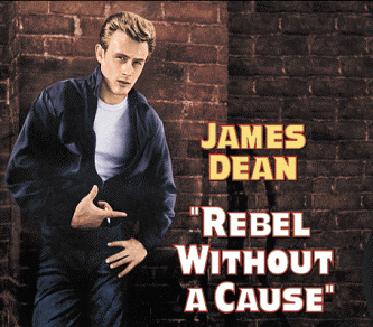
The movie “Rebel Without a Cause” focuses on the lives of three young teenagers named Jim Stark (James Dean), Judy (Natalie Wood), and John Crawford (Sal Mineo) also known as ‘Plato’. Jims rebels because he does not want to be like his parents who have scrambled gender roles. Kids at school will call him a chicken and he hates being called that. Usually Jim ends up in trouble and he and his family move to different towns hoping the next town he won’t get into any trouble. Judy thinks her dad hates her and that’s why she rebels. She wants to be accepted by her dad and have him give her the attention she desires. John rebels cause his mom is never home anymore and his dad left the family, he just lives at home with his nanny. When his parents were around he would run away but they would always take him back. Now his mom is always away from the house and his dad left his family but John wishes they were still there.

The movie “Blackboard Jungle” takes place in a tough high school, North Manuel High School, where the students make the rules and the teachers accept their defeat. The main troubled characters are Gregory Miller (Sidney Poitier), and Artie West (Vic Morrow). Miller is more intelligent and less bitter than his surrounding students. He originally wanted to get the most he could out of his education but soon realized the teachers, his friends, and his family didn’t really care. West is one of the worst kids in the class because he has control over the other students who look up to him and fear him. He is also the leader of a gang that is constantly putting innocent people in danger.

http://www.virginmedia.com/images/Rebel-Without-a-Cause-431.jpg

Every kid in both movie rebels for different reasons. In the beginning of the movie, “Rebel Without a Cause,” Jim, John, and Judy are shown at the city jail in town for misbehaving. Judy is there for walking around at one in the morning after her dad called her a dirty tramp. Jim was taken there after being caught by the police as a minor under the influence of alcohol. John is there on his birthday for shooting puppies and killing them. All three of their families and Ray Fremick (Edward Platt), want to help them but don’t know how to get through to the teens. While in the other movie, “Blackboard Jungle,” West and Miller are in school misbehaving during class and outside of the classroom. Miller was never shown in the movie actually doing anything wrong but that doesn’t mean he didn’t behave his best or have respect for their teacher, Richard Dadier (Glenn Ford). West on the other hand tried sexually harassing another teacher in the library, attacked Mr. Dadier and another teacher in a dark alley, and tried fighting Mr. Dadier with a knife during class. Mr. Dadier is the only person who wants to help these kids and find a way to get through to them.


Throughout both movies we get a better understanding of why the teens decided to make their poor decisions. We also see which ones can be helped or saved and which ones have no hope. Judy just wants to feel loved by her dad and not rejected when she wants a kiss. With Jim it is because his parents don’t listen to him even after he doesn’t want to get into trouble anymore. Plato wants a family that is actually around to spend time with him like all the other kids families. Miller realizes no one cares so he is only staying in school until he can legally drop out. West doesn’t show any clear or exact reasons why but it is presumed that he misbehaves because of society or because he is less privileged. By the end of “Blackboard Jungle” and “Rebel Without a Cause” we find out which kids turn out differently in the end and which kids do not. Jim learns his lesson and his dad finally says he will stand behind his son. Miller is shown by Mr. Dadier that he actually cares about him and wants to Miller get a high school education. Both of these kids get what they have been belonging which gives them a reason to conform a better way of life. On the other hand, Plato and West are not so lucky. Plato thought he, Judy, and Jim could be a family but when he realizes it was just for fun he gets really angry and makes more bad decisions. The police shoot Plato when they don’t know what Plato is doing next and he dies because of this. West tries to fight Mr. Dadier with a knife and wants his buddies to back him up. His buddies realize this isn’t right and help the teacher which gets West taken to the principal’s office to be expelled.


The movies show how some teenage rebellion can be tamed or easily fixed, while other kids are unredeemable. Most of the rebels just slip into these negative behaviors because they don’t know the other alternatives but come out when they realize what is right (the moorings). The unredeemable teens don’t just change their ways because they were caught and got in trouble or because they see their friends making better decisions. None of the kids have the same reason for why they express their teenage angst, but all find a common ground to rebel. Both movies show the main characters constantly struggling to do what’s right or go with what’s wrong. A quote from Senator Estes Kefauver clearly sums up why kids act this way (Doherty 83). He said “Somehow we must get at the causes, must clean up the conditions, which breed criminals. We will find them, I think, in the slums, where the kids don’t have a place to play; in social conditions, where the young feel that society is their enemy; in economic conditions which breed hunger and despair; and, perhaps; even in a lack of understanding on the part of some of our correctional institutions”. Even though society isn’t going to change for just one kid, a parent or a friend who cares might which could save a young adolescent from more dangers.

http://www.destgulch.com/movies/bjungle/bjung12.jpg


Works Cited
Doherty, Thomas. Teenagers and Teenpics: The Juvenilization of American Movies in the 1950s. Philadelphia: Temple University Press, 2002.

Rickard, Ed. "Youth Culture, the Crisis of Early Adolescence." Bible Studies at the Moorings. 7 Feb. 2009 http://www.themoorings.org/life/family/crises/ycult.html.